How to Plan Meetings at a Trade Fair (and Keep the Stand Staffed)
Book customer meetings before the fair, choose slot lengths and rooms, avoid double bookings and keep enough people on the stand — with a sample day plan.
Updated 30 September 2026
For many B2B exhibitors, the pre-booked meeting is the real reason to be at a fair. Customers from a dozen countries are in one hall for a few days; a meeting that would otherwise take a flight takes a walk down the aisle. But meetings also pull people off the stand — and a stand without people loses the visitors you did not book.
This guide shows how to plan meetings so that both work: the booked conversations and the walk-in traffic.
Why book before the fair
Large fairs are crowded and short. InnoTrans 2024 had 169,214 visitors over four days; your key customers have their own agenda and dozens of other stands to visit. The customers you most want to see fill their calendars weeks in advance, so the invitation has to arrive before theirs is full — typically four to six weeks ahead.
A booked meeting also changes the conversation. The customer arrives prepared, the right colleague is there, and there is a room or a quiet corner instead of a shouted exchange in the aisle.
Slot lengths that work
| Format | Length | Where | Who from your side |
|---|---|---|---|
| Introduction / first meeting | 30 min | Stand table | One sales colleague |
| Existing customer, project update | 45 min | Meeting room or corner | Account manager + specialist |
| Technical deep dive or demo | 60 min | Meeting room with screen | Specialist + account manager |
| Management meeting | 30–45 min | Meeting room | Management + account manager |
| Lunch or dinner | 90–120 min | Outside the stand | Host + one colleague |
A sample day: meetings first, then cover
The diagram shows one fair day for four colleagues. Meetings were booked first; booth duty fills the gaps; breaks are staggered so that at least two people are on the stand at any time. It is an example, not a norm — but the principle holds for any team size.
Avoid double bookings
The most common planning error at a fair is the double booking: a colleague in two meetings at once, or two meetings in one room. Check three things for every new meeting:
- Is every attendee from your side free — and actually at the fair that day (arrival and departure times)?
- Is the room or table free for the whole slot, including the buffer?
- Does the stand still have enough people for walk-in visitors during that slot?
Invitations and confirmations
A meeting that only exists in your planning does not exist for the customer. Send a proper calendar invitation, confirm the day before, and make sure the customer knows where to go.
| Item | Why |
|---|---|
| Hall, stand number and meeting point | Large grounds; “our stand” is not an address |
| Date, start and end time with time zone | International guests, calendar apps |
| Names of your attendees | The customer knows whom to ask for |
| A mobile number for the day | For running late or lost |
| Purpose of the meeting | Both sides come prepared |
On the day
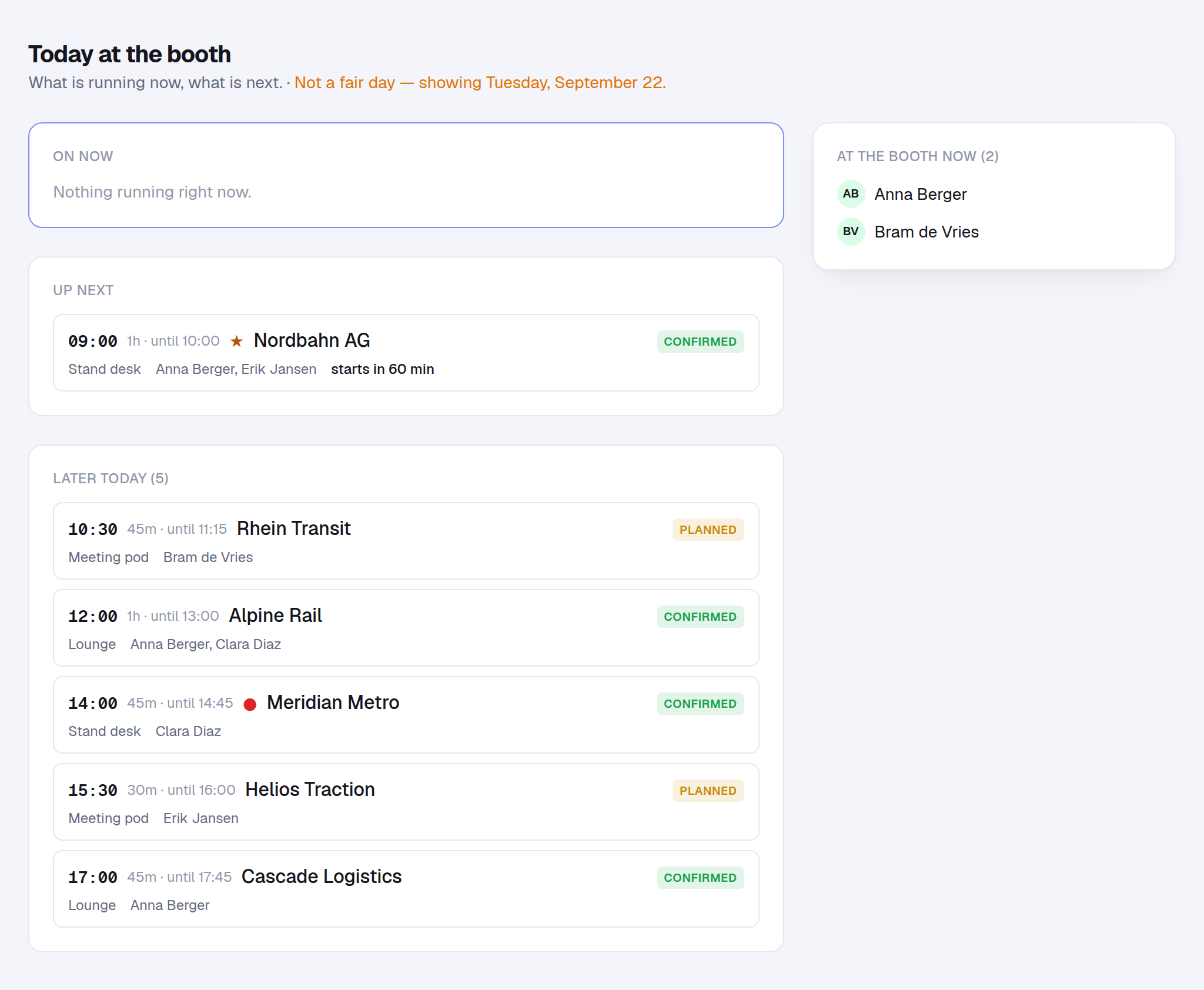
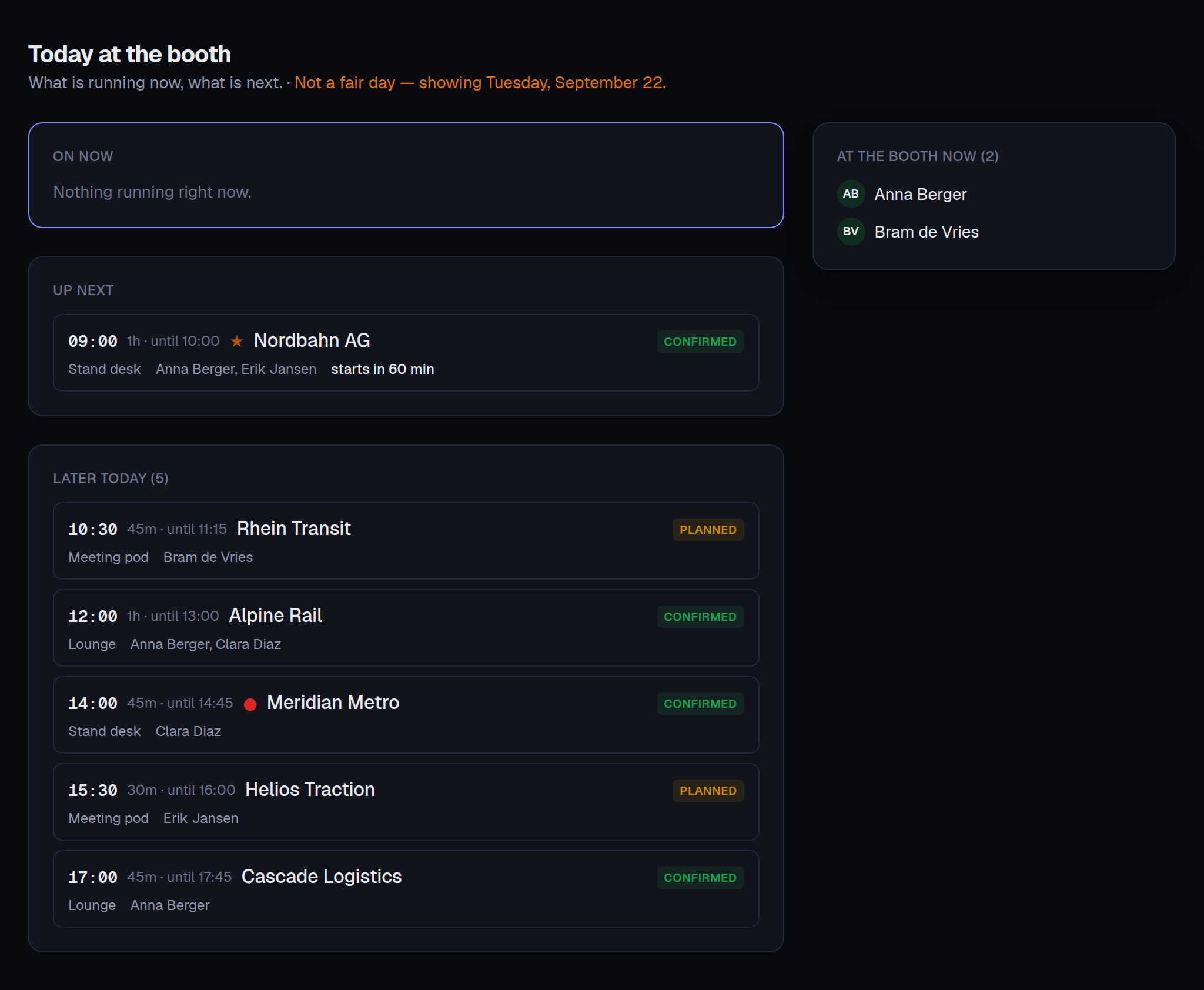
Meetings will run late and customers will turn up unannounced. What helps is a live view that everyone on the team sees: what is on now, what is next, who is on the stand. Then a colleague can see at a glance whether they can join a meeting or must stay at the counter.
Related: how to plan booth staffing · following up trade fair leads
Sources
Do all of this in one shared plan
BoothManager puts meetings, booth staffing, check-in, travel and leads in one plan that updates live for the whole team. One price per company, hosted in Frankfurt.